

Hotel Digital Marketing Strategy: A Channel-by-Channel Roadmap
October 8, 2026
Hotel digital marketing does not start with ads. The order to build six channels in, the stage each one works at and the one metric to track for each.
In Short
A hotel digital marketing strategy decides three things: the order in which a hotel builds its digital channels (website and booking engine, phone, search ads, metasearch, social media and email), the stage of the booking journey each channel works at, and the single metric used to judge each one. Most hotels run this backwards: the ad budget comes first, the website's conversion rate and phone-call records come later, so advertising fills a leaking bucket. The right order runs from the foundation outwards: first the site's conversion flow and measurement, then search and metasearch to capture demand that already exists, then social media to create new demand, and finally email and CRM to bring guests back. Each channel has one primary metric: conversion rate for the website, answer and close rate for the phone, cost per booking for search and metasearch, qualified visits for social, and repeat-booking rate for email. Read in one booking table rather than six reports, the strategy becomes a budget allocation.
Most hotels don't have a digital marketing strategy. They have an ad budget. At the start of the season someone tells an agency or a freelancer "let's run Google and Instagram ads", a budget is approved and campaigns go live. Three months later what's left is a click report, a few hundred website visits and a table that can't clearly answer the one question that matters: did any of this turn into bookings? The problem is not that the ads were badly managed. The problem is that advertising was the starting point of the strategy rather than its outcome.
This article lays out the order in which a hotel should build its digital marketing channel by channel, which stage of the booking journey each channel works at, and the single metric to track for each. It does not cover choosing an agency, pricing or service packages; Hotel Digital Advertising Services Guide already does that. The subject here is the thing that stays the same whether you work with an agency or your own team: the map itself.
A Strategy Is Not an Ad Plan
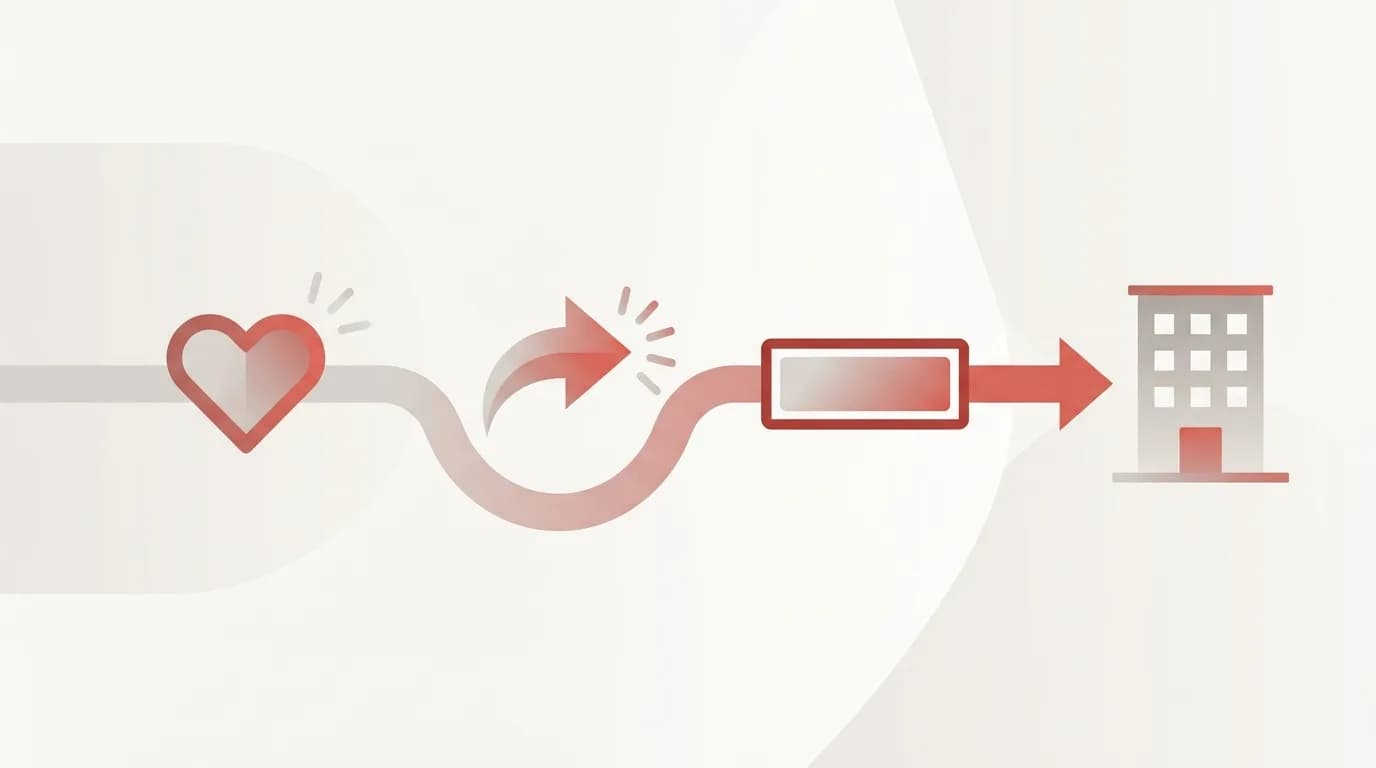
A hotel guest reaches a booking through four stages, and a different channel does the work at each one:
- Creating demand: The guest doesn't yet know where they're going. Social media and video work here.
- Capturing demand: The guest has picked the region or your hotel and is searching. Search ads and metasearch are this stage's channels.
- Decision and close: The guest is on your website or on the phone. The site's conversion flow and the call centre take over.
- Return: The guest has stayed once. Email and CRM bring them back a second time, commission-free.
Strategy means assigning a channel to each of these four stages and deciding the order in which those channels get built. An ad plan is only the budget for the second and first stages. Funding those before the third stage is in place means filling the bucket before patching the hole.
Why the Order Matters: Foundation First
The order in which channels are built determines how far the budget goes. The right order always runs from the foundation outwards: first the place the guest lands (website and phone) and the measurement behind it, then the channels that capture demand which already exists (search, metasearch), then the channels that create new demand (social media), and last the channels that bring guests back (email, CRM).
The reason is simple arithmetic. Sending 10,000 ad visitors to a website converting at 1% produces 100 bookings. Raising that site's conversion rate to 2% first and then running the same ads produces 200 bookings, with no change in ad spend. We looked at why that range is realistic for hotel websites in Hotel Website Conversion Rate Benchmarks. A hotel that runs the sequence backwards spends twice the ad budget for the same number of bookings, and usually never notices, because measurement was left until last too.
Channel 1 — Website and Booking Engine: The Foundation
Stage: Decision and close. Primary metric: Conversion rate (bookings / visits).
Every digital channel ends up in the same place: the hotel's website. The visitor from social media, the one from Google and the one from metasearch all see the same rate page and go through the same booking engine. So the first job is making sure that page doesn't lose them: does it load in three seconds on mobile, is the price visible on the first screen, does the booking finish in three steps, is the phone number tappable on every page?
This channel's second job is measurement. If the booking engine doesn't record every completed booking together with the channel it came from, none of the next five channels will ever have an accurate report. An ad launched before conversion tracking is in place is spend whose result nobody will see. For a concrete list of what to change on the site, see 7 Tactics to Improve Your Hotel Website Conversion Rate.
Channel 2 — Phone and Call Centre: The Invisible Close
Stage: Decision and close. Primary metric: Answer rate and bookings per call (close rate).
The phone is missing from most digital marketing strategies because it doesn't count as "digital". Yet a large share of guests planning a family holiday, a public-holiday break or a high-budget stay ask their last question by phone: "Is a sea-view room still available?", "Is there an extra bed for a child?", "What happens if I cancel?" That call is the warmest demand your advertising will ever produce, and when it goes unanswered the guest usually books the same hotel through an OTA. We described the mechanism in Why Direct Bookings End Up on OTAs at the Last Minute.
Bringing this channel into the strategy takes three things: recording calls with their source (which ad, which page, what time), tracking the answer rate daily, and calling back every missed call. A hotel that doesn't measure the phone never sees part of the bookings its ads generated, and switches those ads off as "not working".
Channel 3 — Search Ads: Capturing Demand That Already Exists
Stage: Capturing demand. Primary metric: Cost per booking (CPA), including bookings closed by phone.
Google search ads capture the guest who is already searching for your hotel or your region. The channel has two separate layers, and they should never be managed in the same campaign:
- Brand searches: Guests typing your hotel's name. They already know you; because OTAs bid on that search too, not showing up on your own name means buying the guest back with commission. Low cost, high priority.
- Generic searches: Region and category searches such as "Kaş boutique hotel" or "Belek family hotel". Competition is high and clicks are expensive; this layer only becomes profitable once the site's conversion rate and phone measurement are in place.
The common mistake with this channel is managing it from the click and impression report. The only valid measure is the cost of the bookings the ads produced (web plus phone) and the net revenue those bookings left. Campaign setup is covered step by step in the Advertising Guide.
Channel 4 — Metasearch: Your Own Rate in the Same Window as the OTAs
Stage: Capturing demand. Primary metric: Direct booking share and cost per booking.
Google Hotel Ads and similar comparison platforms show the guest the OTA rates and the hotel's own rate side by side for the same property. If your hotel isn't on that list, the only option a guest sees when they find you on Google is an OTA, and the booking closes with commission. This channel is the most direct route to lowering OTA share because it doesn't bring guests from somewhere new; it turns guests who were already coming towards the direct channel.
Metasearch has one precondition: the booking engine must be able to push rates and availability to these platforms in real time. That's why it sits fourth rather than third: metasearch switched on before the engine and measurement are ready runs with the risk of showing the wrong price. Setup and the cost model are explained on Google Hotel Ads for Hotels.
Channel 5 — Social Media: Creating Demand
Stage: Creating demand. Primary metric: Qualified visits (users who reach the rate page and pick dates) and remarketing audience size.
Instagram, Meta and TikTok ads reach the guest who doesn't yet know where they're going. Expecting direct bookings from this channel is the most common disappointment we see: a social ad introduces the guest, and the booking is usually closed by search or by phone. So social media's success is measured not by booking count but by the qualified visits it sends to the site and by how well those visitors are recalled through remarketing over the following days.
That's why it sits fifth: if the four channels before it aren't working, social media turns into an expensive visibility expense. Which platform works at which stage is covered in detail in Which Social Media Platform Works Best at Each Stage of the Hotel Booking Funnel?
Channel 6 — Email and CRM: The Commission-Free Second Stay
Stage: Return. Primary metric: Repeat-booking rate and net revenue from email-driven bookings.
The first five channels bring new guests, and every one of them costs money. The sixth brings back guests who have already stayed, at close to zero cost; but only if the guest's contact details and consent were recorded by the hotel. The email address of a guest who came through an OTA usually never reaches the hotel; the one who came direct or by phone is on file. That is the hidden return of building the first five channels: every guest who arrives direct becomes a record you can reach next season without paying commission.
This channel is last not because it matters least, but because until the earlier channels are working there is nobody on the list. How to set up pre-season reminders, post-stay thank-yous and early-booking flows is covered in Hotel Email Marketing: How to Bring Guests Back to Book Again.
In One Table: Channel, Stage, Metric
| Order | Channel | Stage | Primary metric |
|---|---|---|---|
| 1 | Website + booking engine | Decision and close | Conversion rate |
| 2 | Phone / call centre | Decision and close | Answer and close rate |
| 3 | Search ads | Capturing demand | Cost per booking |
| 4 | Metasearch | Capturing demand | Direct booking share |
| 5 | Social media | Creating demand | Qualified visits |
| 6 | Email + CRM | Return | Repeat-booking rate |
The rule of the table is simple: a channel's metric can't be calculated until the channel in the row above it is measured. Search's cost per booking comes out wrong without call records; social media's qualified visits are invisible without site measurement.
A 90-Day Rollout Calendar
Days 1–30: Foundation. Review the website's mobile speed and booking flow, set up conversion tracking, start recording phone calls together with their source. This month's ad budget goes to brand searches only, to stop OTAs buying your own name.
Days 31–60: Capturing demand. Open generic search campaigns by region and room type and put your direct rate live on metasearch. With the first month's data the conversion rate and close rate are now known, so you can calculate how many clicks it takes to produce a booking.
Days 61–90: Creating demand and return. Launch social campaigns together with a remarketing audience that recalls visitors who reached the site and saw a rate. The list of guests who booked direct during the first two months becomes the first audience for end-of-season and early-booking email flows.
This calendar is realistic for a 30–150 room hotel that already has a website and a booking engine. If the infrastructure is being built from scratch the first phase takes longer; the order doesn't change.
Four Common Mistakes
- Running the sequence backwards. Instagram ads first, then "why isn't the site selling?". This is the most expensive mistake, because the budget has been spent and no data has been collected.
- Judging each channel by its own report. The ad platform reports clicks, social reports engagement, the phone system reports call counts. None of them reports bookings. Until the channels are compared in one booking table, in the same currency, the strategy never turns into a budget allocation.
- Leaving the phone out of the strategy. The warmest demand your ads produce arrives by phone, and when it isn't measured the ads look like they aren't working.
- Leaving brand searches to the OTAs. Not showing up on your own name means paying commission for a guest who had already chosen you.
Agency or In-House?
Every step of this map can be run by an in-house team or by an agency; what matters is that the map stays the same. If you're going to work with an agency, your first question shouldn't be "which platforms do you advertise on" but "how do you connect a booking closed by phone to the ad report". For agency selection, pricing and scope of contract, see the Hotel Digital Advertising Services Guide.
Convertels is the layer that brings all six channels of this map into one system: the website and booking engine, the call centre, ad management, metasearch, social media and CRM integration all write to the same booking table. So the question "which channel, at which stage, delivered what" is read from one screen rather than six separate reports. The full set of channels and the working model are on the Hotel Digital Advertising Agency page.
The essence of a digital marketing strategy is not deciding which channel is "good". It's making sure each channel works at the right stage, in the right order, with one metric. When that is the map, the ad budget stops being an expense line and becomes a measurable investment.
Let's map your hotel's channels together
Which of your channels works at which stage, and which one isn't being measured? Convertels brings all six channels into one booking table and allocates your ad budget by bookings, not clicks.
Request a QuoteSources
Official documentation on setting up search advertising and metasearch channels:
- Google Ads Help — Google Ads guide— Official documentation on campaign setup, bidding and measurement
- Google Hotel Center Help — Getting started with hotel campaigns— Official documentation on feeding rates and availability to channels
Related Posts
Which Social Media Platform Works Best at Each Stage of the Hotel Booking Funnel?
In hotel social media advertising the real question is not "which platform" but "which stage". Matching TikTok, Instagram, Facebook and retargeting to the funnel.

Hotel Email Marketing: How to Bring Guests Back to Book Again
Hotel email marketing is not a discount newsletter. It is the channel that turns past guests into commission-free repeat bookings. Segments, 5 flows, measurement.