
Which Social Media Platform Works Best at Each Stage of the Hotel Booking Funnel?
September 24, 2026
In hotel social media advertising the real question is not "which platform" but "which stage". Matching TikTok, Instagram, Facebook and retargeting to the funnel.
In Short
For hotels, the key decision in social media advertising is not which platform to use but which stage of the guest's booking journey an ad is meant to serve. The same person first discovers a destination through a short video, then compares the hotel's rooms, location and reviews, and finally sees the price and decides. Each of these three stages needs a different format, a different campaign objective and a different measure of success. At the inspiration stage, short-video placements such as TikTok and Instagram Reels are judged on reach and view rate. At the consideration stage, Instagram and Facebook carousels and room showcases are judged on engaged time on the website. At the decision stage, retargeting ads shown to people who visited the site and saw a price but did not book are judged on direct bookings and phone calls. The most common mistake is putting the whole budget into one "traffic" campaign and expecting bookings from inspiration ads.
The question hotels ask most about social media advertising is "Instagram, Facebook or TikTok?" — and it is the wrong question. These platforms are not competing with each other; they are shop windows that the guest passes at different moments of the booking journey. The same person stops on a TikTok clip of a quiet bay in March, compares hotels in that area on Instagram in April, checks a price on the hotel's website in May and closes the tab, then books two days later after seeing the same room again in their Facebook feed. Every platform does a different job along that path. Expecting all of them to deliver the same result — "bring bookings" — means judging most of the budget by the wrong yardstick.
This article looks at social media advertising stage by stage rather than platform by platform: which platform, which format, which campaign objective and, above all, which success metric belongs to each stage. We covered how and why ad budgets get wasted in How Advertising Budgets Burn in Hotels; here we look at how that budget should be split across social media.
Start With the Map: The Three Social Media Stages of a Guest
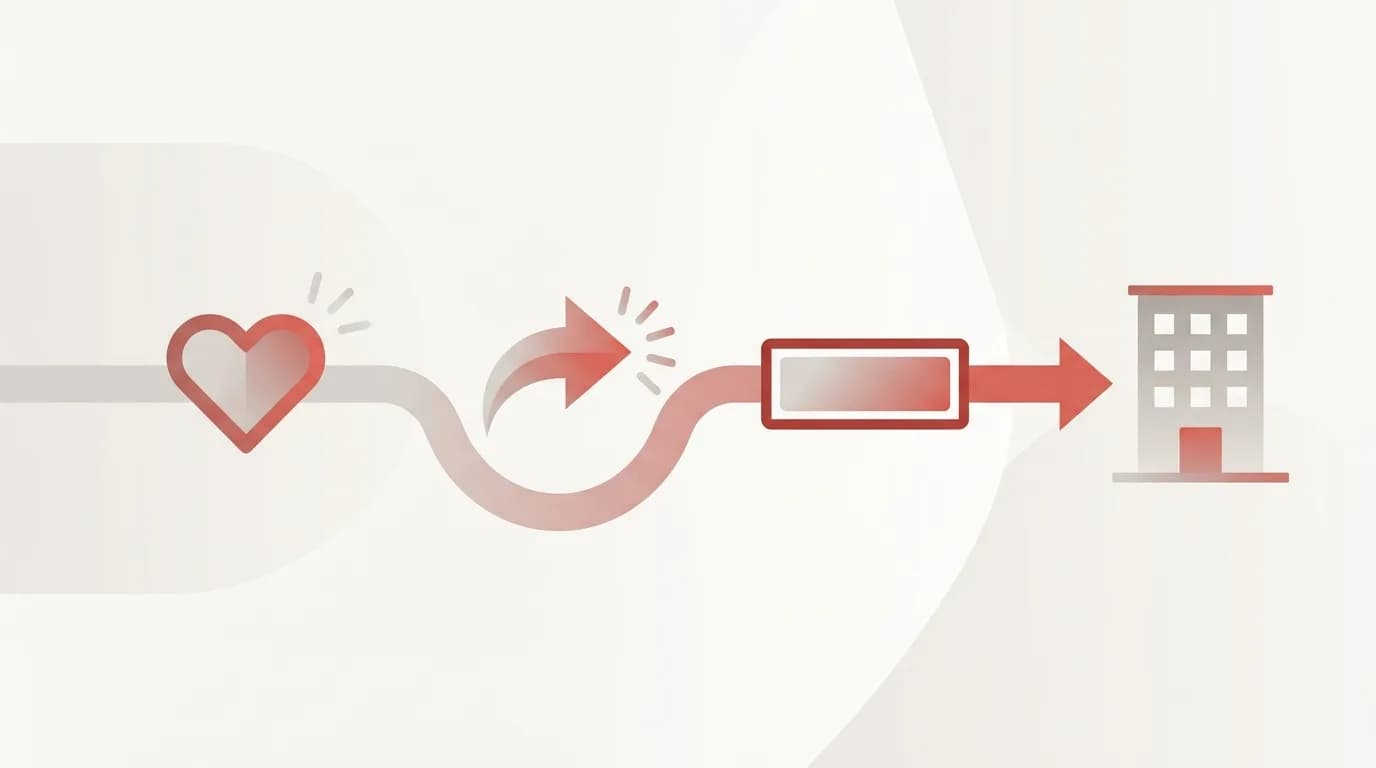
A hotel booking is not an impulse purchase. Especially for holidays, guests go through a decision process that can stretch over weeks. From a social media perspective, that process breaks into three stages:
- Inspiration (awareness): The person is not looking for a hotel yet. They may not even have chosen a destination. A video, a view or an experience makes them stop scrolling. This is where they hear the hotel's name for the first time.
- Consideration: The destination is more or less settled. The person is weighing options: what are the rooms like, is the pool crowded, is it child-friendly, how far is the beach? They browse the hotel's profile, highlights and reviews, and dip in and out of the website.
- Decision (conversion): The person has visited the hotel's website, perhaps seen a price or picked dates, but has not completed the booking. They no longer need persuading; they need a reminder and reassurance.
We walked through the full booking journey — every touchpoint, social media included — in How a Real Booking Journey Unfolds. Below we look at what each stage means on social media. This split is not just our own framework, either: TikTok Ads Manager groups its campaign objectives directly under awareness, consideration and conversion, and the objectives in Meta's Ads Manager (awareness, traffic, engagement, leads, sales) follow the same logic.
Stage 1 — Inspiration: TikTok and Instagram Reels
The language of inspiration is short video. TikTok and Instagram Reels are where someone who is not yet searching for a hotel stops and watches. The ad's job here is not to sell but to plant the hotel's name and a feeling in memory: an empty jetty at sunrise, children laughing down a water slide, a local dish arriving at the dinner table.
- Format: 9:16 vertical, a visual hook in the first two seconds, 10–20 seconds long. Natural content that looks phone-shot usually outperforms a polished commercial.
- Campaign objective: Reach or video views. Running a "conversion" campaign at this stage squeezes the algorithm into a small audience that is already close to booking and stops you from reaching new people.
- Targeting: Broad. Target market (country/city), age range and interests are enough. Narrow targeting defeats the purpose of this stage.
- Success metric: Cost per thousand impressions, the share of people who watch 50% and 100% of the video, profile visits. Not bookings.
What TikTok means for a hotel depends on the target market. For a hotel selling to young couples, groups of friends or specific international markets, it is a strong inspiration channel; for a thermal hotel selling mostly to domestic, middle-aged families, Instagram Reels often does the same job more efficiently. The rule is simple: don't choose a platform, choose where your guests actually spend their time.
Stage 2 — Consideration: Instagram and Facebook
At the consideration stage the person is looking for information. Meta's placements — the Instagram feed, Stories and Facebook — stand out here because they offer formats that can show several room types, facilities and a price range in a single ad.
- Format: Carousels (one room type or facility per card), short room-tour videos, "a day at the hotel" Story sequences, cards covering location and transfers.
- Campaign objective: Traffic or engagement — but optimised for quality visits (for example, landing page views), not for clicks.
- Targeting: People who watched most of the inspiration video, profile visitors, lookalike audiences and travel-interested users in the target market.
- Success metric: Average engaged time on the site, pages per visit, the rate of moving on to room pages or the booking engine.
There is a simple test that says a lot at this stage: in Google Analytics, check the average engagement time of social traffic arriving with UTM tags. If it is under 20 seconds, the ads are bringing uninterested people to the site; in a well-built consideration campaign it rises to 50–90 seconds and users reach the room and price pages. We explained why click counts on their own are misleading in Why Click Count Is the Most Dangerous Lie.
Stage 3 — Decision: Retargeting
This is where social media connects most directly to bookings. Retargeting means showing ads to people who visited the hotel's website — especially those who saw a price or selected dates — but did not complete a booking. These people already know your hotel; what they need is not more persuasion but the removal of the last obstacle in front of the decision.
- Format: Dynamic ads that recall the room type and dates they looked at, direct-channel perks such as "breakfast included when you book direct", reassurance on flexible cancellation and secure payment, real guest reviews.
- Campaign objective: Sales / conversions. The algorithm has to be taught the "booking completed" event — which means a properly configured measurement setup.
- Targeting: Site visitors from the last 7–30 days, people who viewed the price or booking engine page; anyone who booked in the last 30 days is excluded.
- Success metric: Direct bookings, cost per booking, return on ad spend (ROAS) and — often forgotten by hotels — phone calls that follow the ad.
Retargeting has two important limits. First, the pool is filled by visitors from the two earlier stages: a hotel that doesn't invest higher up the funnel sees its retargeting audience shrink over time and ends up showing the same people the same ad several times a day. Second, measurement: after iOS privacy changes and cookie restrictions, a browser pixel alone misses part of the conversions. Without a server-side Conversions API setup, the algorithm cannot see who actually booked and optimises for the wrong people. We explained why in Why Meta Ad Conversion Tracking Got Harder, and covered the setup steps in our Meta API Setup for Hotels guide.
The Often-Missed Fourth Moment: Demand That Turns Into a Phone Call
A significant share of hotel guests — families and high-value bookings in particular — take the last step on the phone rather than on the website. They see an Instagram ad, visit the site, check the price and call. Prices and facilities are discussed, but the guest may hang up with "let me think about it". The social media report records this person as "not converted"; in reality the sale is not lost, it just hasn't happened yet.
That is why the decision stage of social media advertising has to be planned together with the phone channel. Convertels' Callback Remarketing filters these discussed-but-unclosed warm opportunities by how likely they are to book and puts them in front of the team within the critical window before the guest turns to an OTA or a competitor. Demand generated by a social media ad can then close on the phone even if it doesn't close on the site — and be credited to the right source in the report.
Side by Side: Matching Stage, Platform and Metric
| Stage | Leading platform / placement | Campaign objective | Success metric |
|---|---|---|---|
| Inspiration | TikTok, Instagram Reels | Reach, video views | CPM, view rate, profile visits |
| Consideration | Instagram feed and Stories, Facebook | Quality traffic, engagement | Engaged time, move to room/price pages |
| Decision | Meta retargeting (Instagram + Facebook), TikTok retargeting | Sales / conversions | Direct bookings, cost per booking, ROAS |
| Phone | Calls generated at every stage | Calls and recovery | Ad-driven calls, bookings from calls |
How Should the Budget Be Split? A Worked Example
There is no single correct ratio; the split depends on how well known the hotel is and how much traffic its website already gets. Here is the logic with an example (the figures are illustrative — fill in your own data).
Take two hotels, each with a monthly social media budget of 100,000 TRY. Hotel A is a well-known beach hotel that has been running for 15 years and gets tens of thousands of website visitors a month. Its retargeting pool is already full, so it can put roughly half the budget (50,000 TRY) into the decision stage, 30,000 TRY into consideration and 20,000 TRY into inspiration. Hotel B is a newly opened 30-room boutique hotel with a few thousand visitors a month. If it puts half its budget into retargeting, it will show the same ad to a small audience several times a day and either fail to spend the budget or wear the audience out. A healthier split for Hotel B might be 40,000 TRY inspiration, 35,000 TRY consideration and 25,000 TRY decision — shifting the weight down the funnel as the audience grows.
A practical rule: if the average number of times each person sees your retargeting ad per week (frequency) keeps rising but bookings don't, the problem is not the decision stage — it is that the upper stages are not bringing in enough new people. We looked at how budget and channel decisions change by property type in Ad Strategy by Hotel Type: Boutique vs. Chain.
The 4 Most Common Social Media Advertising Mistakes
- Putting the whole budget into a single "traffic" campaign. One campaign shows the same message to three different people at three different stages. The algorithm finds the cheapest click — and the cheapest click usually comes from someone who will never book.
- Judging inspiration ads by bookings. The TikTok video gets switched off because it "brought no bookings"; three weeks later the retargeting pool shrinks and decision-stage performance drops. The impact of inspiration ads shows up in the cost of the later stages.
- Running retargeting without a frequency cap. Showing someone who saw a price the same ad five times a day for two weeks is not a reminder, it is a nuisance — the fastest way to cool a warm audience.
- Starting without a measurement setup. If the booking engine doesn't report conversions back to the ad platform, the decision stage is flying blind. Without proper matching between systems, optimisation is impossible — we discussed this in Is Optimization Possible Without Proper Attribution?
How Convertels Builds This Framework
Convertels manages social media as a sales-driven conversion channel, not a PR channel. In our Social Media Marketing for Hotels service, each stage gets its own campaign, budget and success metric; Instagram and Facebook ads are built to support Google campaigns, and TikTok is added to the mix depending on the target market. On the measurement side, Convertels Pulse shows how close social media visitors get to booking, which source generates contact intent and which campaign actually brings bookings; phone demand is tied into the same view through call centre and CRM data.
One note: Convertels does not run decision-stage campaigns on a setup where conversions cannot be measured and the booking engine doesn't talk to the ad platform. An ad you can't measure is wasted budget; the infrastructure is fixed first, then the budget goes up. You can see which channels are included in each package on the Digital Ad Packages page.
See at which stage your social media budget is leaking
Convertels reviews your current Instagram, Facebook and TikTok campaigns stage by stage and reports which campaign produces inspiration, which one produces bookings, and where your measurement setup is blind.
Request a QuoteSources
Official documentation on splitting ad objectives by funnel stage and measuring engagement:
- TikTok Business Help Center — Advertising objectives— Official documentation grouping campaign objectives by awareness, consideration and conversion
- Google Analytics Help — Dimensions and metrics— Official definitions of measurement metrics
For a deeper look at this topic, see Google Ads Management for Hotels guide.
Related Posts
Ad Strategy by Hotel Type: Boutique vs. Chain
A boutique hotel and a hotel chain don't have the same ad problem — one is spending on the wrong audience, the other on the wrong location. Here's the right channel and measurement approach for each.

Why Did Tracking Meta Ad Conversions Get So Much Harder?
iOS privacy changes and browser restrictions have made it harder to see whether Meta ads actually drive bookings. Here's the root cause and how Conversions API plus first-party data fix it.