
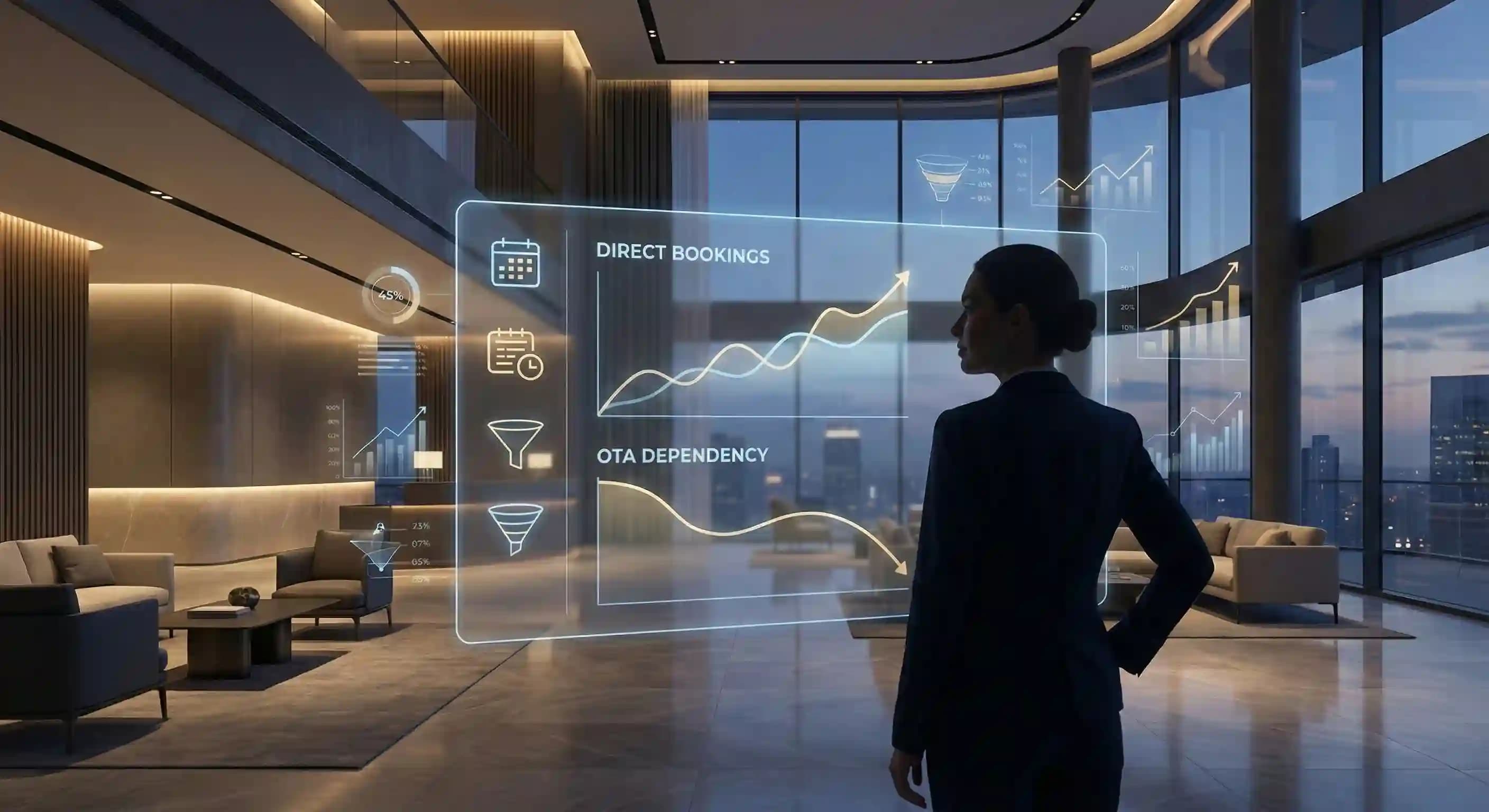
Why Does the Booking Decision Take Only a Few Seconds?
May 19, 2026
Research can take days, but the purchase decision is most often made in a very narrow window of just a few seconds. Hotels' biggest losses begin exactly here: failing to notice the brief moment when the user has decided.
In Short
Research for a hotel booking can take days, but the actual purchase decision is made in a narrow window of a few seconds, when the user goes quiet on the final rate screen. Entering card details is not a new decision point; it is the execution of a decision already made. Because most hotel infrastructure measures only completed transactions, a user who reaches the payment screen and leaves without finishing is treated as an ordinary visitor — yet that person is usually not undecided, only pausing to speak to a partner or fetch a wallet. Once that short moment passes, the resolve cools quickly, and if the process is left unattended the second-guessing begins: was there somewhere with better cancellation terms? That post-decision cooling gap is exactly where OTAs are strongest. So the job of a booking system is not only to take payment but to catch that window before it cools.
Many hotels think of the booking process as a long purchase journey. It is assumed that the user researches for days, compares dozens of hotels, and eventually decides after lengthy deliberation. That is why most systems focus only on the outcome: was the credit card entered, was the payment completed, was the reservation closed?
But in the digital world, the real decision process is not as long as you might think.
1. The Decision Is Made in Seconds, Not Months
A user may browse hotels for days. But all of that time most often prepares for one critical moment. The user selects dates, eliminates options, and then goes quiet for a few seconds on that final pricing screen in front of them. If they move past that moment to the next step, the decision has largely been made. The human mind makes the purchase decision quietly while looking at the screen. The credit card screen is usually not a new moment of decision — it is the execution phase of a decision already taken.
2. Hotels Measure the Outcome, Not the Decision Moment
Most hotel infrastructures only measure completed transactions. If the user reaches the payment screen and does not finish the booking, the system treats it as an ordinary exit. But in reality, the user is not undecided. They have simply paused to speak with their partner one last time, clarify flight times, or go and get their wallet. Because standard systems still evaluate this user — who has already made their decision — as an "ordinary visitor," hotels quietly lose their most valuable booking candidates.
3. The Post-Decision Gap (The Greatest Danger)
Because the decision moment is so brief, the resolve the user feels in that instant does not stay fixed for long. When a customer says "OK, we're staying here," the energy from having made a decision drops quickly. If the process drags on or the hotel remains silent during this gap, the user's mind begins to question the confidence they felt in that moment. "Was there somewhere with better cancellation terms?" or "Let me check the intermediaries too" — these thoughts germinate precisely during this gap.
This post-decision gap is exactly where OTAs are strongest. Because what detaches the user from the hotel is not the price itself — it is the process going unattended during that cooling phase after the decision has been made.
4. Real Optimisation Is Capturing the Timing
The true job of a booking infrastructure is not simply to process a credit card payment. The real job is to understand that narrow window in which the user has decided, and not allow the gap to cool. A Hotel Reservation System takes the process beyond being a simple payment flow. By adapting to the human rhythm of decision-making, it keeps the process warm before the customer begins to question their confidence, and provides the right guidance at the right moment.
Hotels' biggest problem is not their inability to bring users to the site — it is their failure to notice, in that brief instant, the user who has already made their decision.
For a deeper look at this topic, see our Hotel Website solution.
Related Posts

Why Do Users Disappear After Seeing the Price?
Every user who leaves the pricing screen does not mean a lost sale. The real problem is understanding which exits actually matter — and knowing who to chase and who to let go.

In Hotels, the Trust Problem Starts Before the Sale
In hospitality, the trust problem doesn't start with the SSL certificate on the payment screen. It breaks during the very first moments when the user is researching and trying to decide. The real disconnect happens the instant the phone rings.