
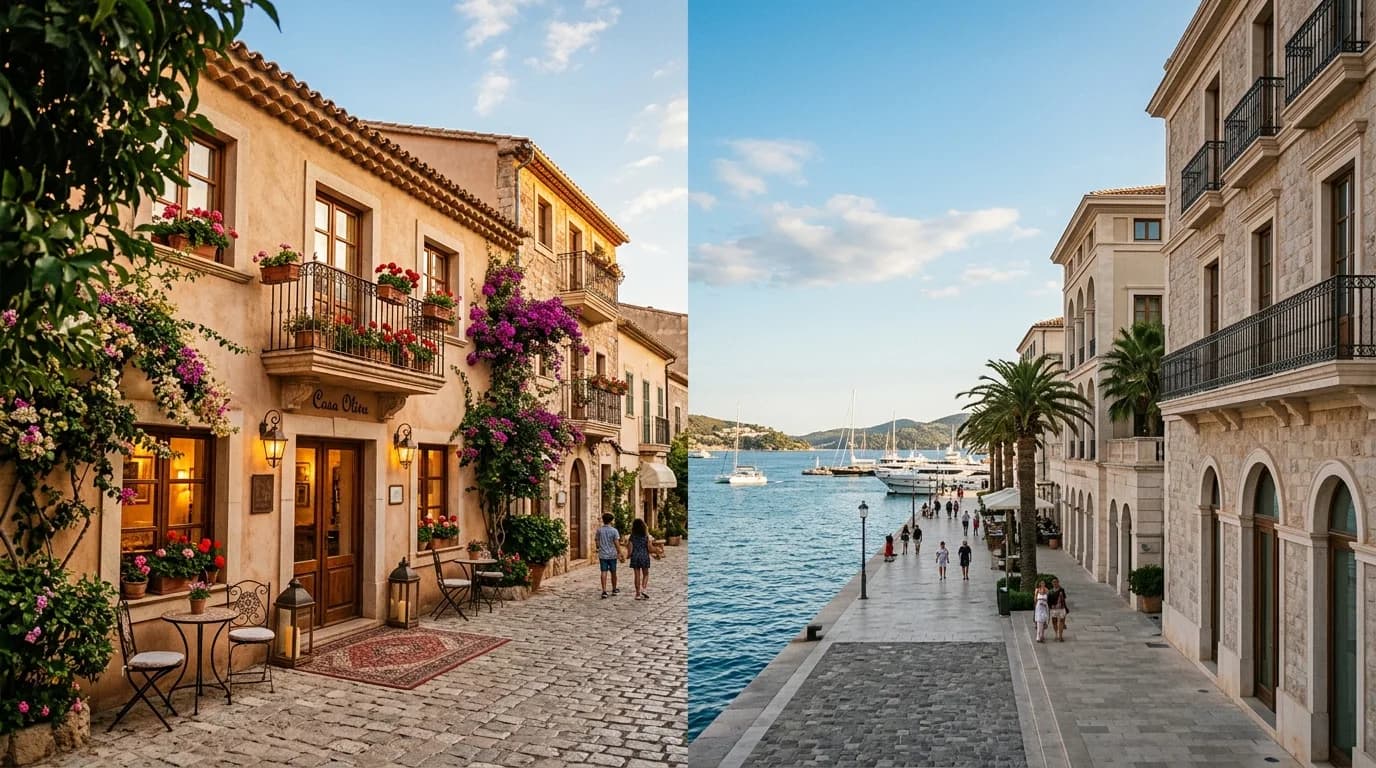
Ad Strategy by Hotel Type: Boutique vs. Chain
August 19, 2026
A boutique hotel and a hotel chain don't have the same ad problem — one is spending on the wrong audience, the other on the wrong location. Here's the right channel and measurement approach for each.
In Short
Boutique hotels and hotel chains have advertising problems that come from different roots, which is why the same strategy doesn't fit both. For a boutique hotel, the problem is audience: price-focused standard ads miss guests who care about design and experience, and high-engagement Instagram content often funds a crowd with no real purchase intent, because likes and booking intent are different signals. For a chain, the problem is location: a centralized budget drives traffic to the main brand but doesn't show which property is actually converting, so an underperforming location can quietly burn budget for months. The common thread, regardless of hotel type, is that unmeasured budget burns no matter the channel. The fix for a boutique hotel is tracking purchase intent second by second and shifting spend to high-intent visitors, plus winning back loyal guests through CRM instead of paying OTA commission again; for a chain, it's segmenting traffic by property, calculating ROI separately per location, and using cross-sell to activate the existing guest pool.
When a boutique hotel and a five-property chain are run on the same advertising logic, they end up in the same place: spend continues, bookings don't grow at the same rate. But the cause isn't the same. In a boutique hotel, the problem is usually talking to the wrong audience; in a chain, it's usually pouring budget into the wrong location. A strategy that forces both into the same mold fails on both sides, just for different reasons.
The root of this is that the two business types have fundamentally different decision structures. In a boutique hotel, a single decision-maker (usually the owner or general manager) runs the entire budget against one audience; the question is whether that audience is defined correctly. In a chain, the budget is already spread across multiple locations; the question is whether that split is done correctly. In this post, we walk through how ad strategy should differ by hotel type — from audience to channel, from measurement to budget allocation — with concrete examples.
Boutique Hotels: Advertising's Job Is Filtering Intent, Not Selling Emotion Alone
A boutique hotel guest decides based on design and experience before price. That's why standard, e-commerce-style ads — "best price, book now" — don't work with this audience: the guest isn't comparison-shopping in the first place, they're looking for something else.
The real trap starts here: a visual-first Instagram campaign can collect hundreds of likes and comments without any of that engagement turning into a booking. A like and purchase intent aren't the same signal — one is aesthetic approval, the other is a decision moment. A $1,500/month visual content campaign might rack up 8,000+ likes while converting under 1% of that engagement into a booking, because the campaign never asked "who's close to buying." Most of that budget ends up funding a crowd that was never going to book.
The right approach keeps the visual, emotional storytelling but adds an intent layer behind the scenes: which visitor is just browsing, which one picked dates and lingered on the pricing page, which one came back to the same room more than once? When budget shifts toward that last group — the visitors actually close to booking — the same $1,500 reaches far fewer people but converts at a much higher rate; total bookings typically double or triple, because spend is now allocated by intent, not interest.
The second opportunity boutique hotels miss is the returning guest. A guest who has already stayed with you has no trust problem — they already know the product. Yet most hotels win this guest back by paying an OTA commission again, typically 15-25% for a booking that shouldn't need it at all. A properly maintained CRM reaches these guests directly, through your own channel and commission-free, right as they start planning their next trip — without needing any of the budget you'd otherwise spend convincing a cold audience.
Hotel Chains: Advertising's Job Is Measuring by Property, Not Centralizing
Chains go wrong in a different place: a centralized ad budget is set up, and every property is folded into one brand-level campaign. The problem is that a centralized campaign drives traffic to the main brand but doesn't show which property is actually converting that traffic into sales. A concrete example: in a 5-property chain with a $9,000/month centralized budget, the two weakest-performing properties might consume roughly 40% of that budget while producing only 10% of total bookings — and because the centralized report never breaks this down by property, the waste goes unnoticed for months.
Standard ad reports fall short here because they only show total clicks and total spend. What's needed is analyzing each property within its own region — which location's ads bring in low-intent, scattershot traffic, and which one converts high-intent users into actual bookings. Budget optimization needs to follow these property-level results, not the brand total; otherwise a strong-performing property keeps quietly subsidizing a weak one, and no one notices.
The biggest resource chains fail to use is their own data. A guest who stayed at one of your properties has no trust problem with your brand. When a property in a different city enters high season, targeting a cold audience that's never been to that city with expensive ads is the wrong first move — pulling your existing guest pool together in one CRM and running a targeted cross-sell campaign produces commission-free bookings from the same budget. Ten different properties working with ten different agencies and ten different reports makes using this shared data nearly impossible — without one unified system, the cross-sell opportunity gets missed systematically.
The Shared Mistake: Unmeasured Budget Burns Regardless of Channel
Even though the boutique problem is audience and the chain problem is location, the root cause lands in the same place: unmeasured ad budget. Tracking clicks and impressions is not the same as tracking which click turned into a booking. In a boutique hotel this shows up as confusing "likes" with "intent"; in a chain it shows up as confusing "total traffic" with "property-level sales" — but both are different faces of the same underlying gap: no measurement layer connects spend to outcome. Regardless of hotel type, a system that can't make this distinction can't route budget correctly even if it picked the right channel.
Diagnosing this in your own property comes down to a simple question: "Can I show how many bookings each $1,000 I spent last month produced, and which campaign — or, for a chain, which property — it came from?" If you can't answer that with a real number, the problem isn't your channel choice, it's the missing measurement layer — and no channel or budget change will fix it until that gap is closed.
Same Budget, Two Hotels: Why the Outcome Differs
To make the gap concrete, let's follow the same budget size through two hotel types: $3,000/month.
In a boutique hotel, spent on a standard "reach as many people as possible" campaign, this budget typically nets 150,000-200,000 impressions, a small fraction reaches the website, and under 1% converts to a booking — meaning $3,000 usually buys no more than 10-15 bookings. The same $3,000 routed through an intent filter (visitors who lingered on the pricing page, picked dates, or returned) reaches fewer people but converts 2-3x better; the typical outcome is 25-35 bookings — same spend, different recipient.
In a 5-property chain, the same $3,000 split evenly across properties ($600 each) lets low-demand properties burn through their share while a high-demand property stays under-funded relative to its potential — total bookings land below what the budget could produce. The same $3,000 allocated dynamically based on each property's track record (more to the strong performer, less to the weak one) typically produces 20-30% more total bookings, because spend now follows outcome data instead of an equal split.
In both cases, the budget amount never changed — what changed is the measurement and allocation logic deciding who or where it goes.
So How Should You Split Your Budget? Channel Priority by Hotel Type
To make this concrete, the two hotel types' priorities diverge clearly:
- Boutique hotels: Visual-first social (Instagram, Meta) stays in the mix for brand awareness, but the bulk of the budget shifts to intent-filtered retargeting and CRM campaigns targeting returning guests. The goal isn't reach, it's filtering for the right audience. Rule of thumb: cold-audience spend shouldn't exceed a third of the total; the rest should go to visitors showing intent signals.
- Chains: Budget lives in separate, property-level campaigns rather than one central pool; each location's ROI is reported separately. When a property is flagged as underperforming, its budget is automatically trimmed and shifted to the stronger performer. For a property entering high season, cross-sell to the existing guest pool comes before cold-audience ads.
- In-between profiles (resorts, thermal hotels, city hotels): These usually lean toward one end or the other — single-location and experience-driven leans boutique, multi-property leans chain; the deciding factor is number of locations, not room count.
What both approaches share is a measurement layer that tracks spend by outcome — which click became a booking — rather than by channel. Without that layer, both boutique and chain hotels arrive at the same result for different reasons: spend disappears into a black box no one can measure.
When Should You Revisit Your Strategy?
Even a well-built, type-specific ad strategy ages. Three situations signal it's time to revisit the current setup:
- When a new property opens: A boutique-style setup built for a single property stops being enough once the business reaches chain scale — if the budget stays centralized, the new property gets lost in the older ones' shadow.
- When OTA share climbs noticeably: If your direct booking rate is dropping and OTA commission is growing, the problem is usually not the ad channel itself but a weakening intent filter or property-level measurement — check the measurement layer before switching channels.
- At seasonal transitions: Rising demand at a property or boutique hotel entering high season can quietly push budget back toward a cold audience by default; in these windows, the existing guest pool and intent-filtered traffic usually stay cheaper and convert better.
Conclusion: Your Hotel Type Should Be the Starting Point of Your Ad Strategy
The difference between a boutique hotel and a chain isn't just room count — it's how the guest decides and how the business's data is structured. For a boutique hotel, the fix is keeping the emotional story while filtering for purchase intent; for a chain, it's dropping the centralized budget in favor of property-level measurement. Both come down to the same underlying need: a system that can see which spend actually turns into a booking. Without that system, no matter how well the channel is chosen, the budget keeps leaking at the same invisible point.
Figuring out which profile your hotel is closer to comes before picking the right channel — and it isn't a one-time decision; it's something worth revisiting as the business grows or the season changes. If your ad strategy is still built around what your hotel looked like two years ago rather than what it is today, part of your budget is probably still solving a problem that no longer exists.
Let's build the right ad strategy for your hotel type
From boutique to chain, Convertels combines intent-based targeting, property-level measurement, and CRM integration into a single system.
Get a QuoteRelated Reading
External Resources
For a deeper look at this topic, see Google Ads Management for Hotels guide.
Related Posts
How Advertising Budgets Burn in Hotels
The classic end-of-month meeting: graphs in the reports are all pointing up. Until the hotel manager checks the bank account. The "wrong data" you feed your ad algorithms is quietly burning your budget.

How to Run Reservation-Driving Digital Advertising for Hotels?
Running digital ads is not the same as getting reservations for your hotel. Many hotels spend on advertising but fail to get measurable, sustainable, and profitable bookings. In this article we walk through, step by step, how hotels should set up truly reservation-driving digital advertising the Convertels way.